
Product line
Blemish care
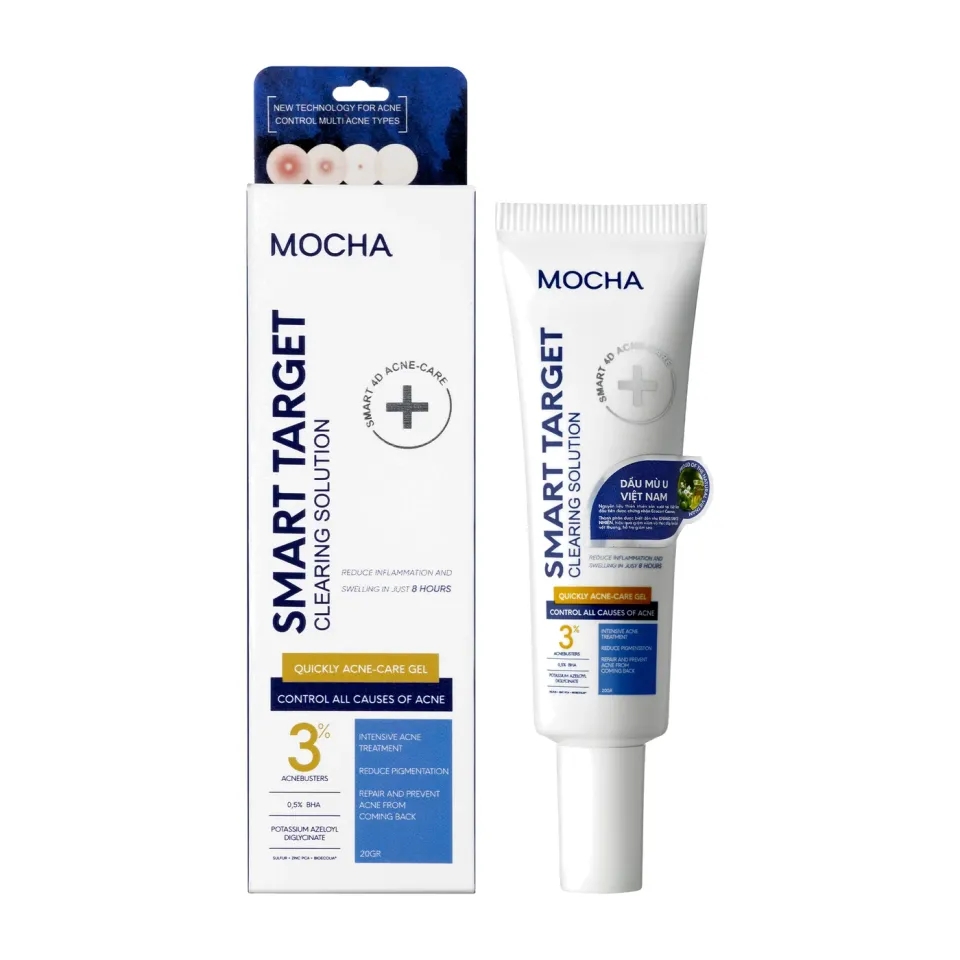
- 5active concentrations printed on packs
- 2products, labelled the same way
Two phases, two different steps: while the spot is inflamed, and after it settles but leaves a darker mark.
2 products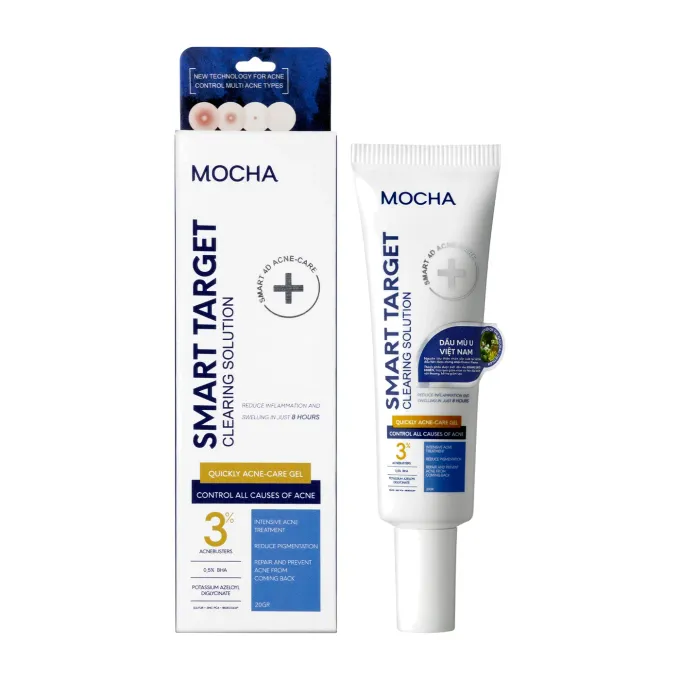
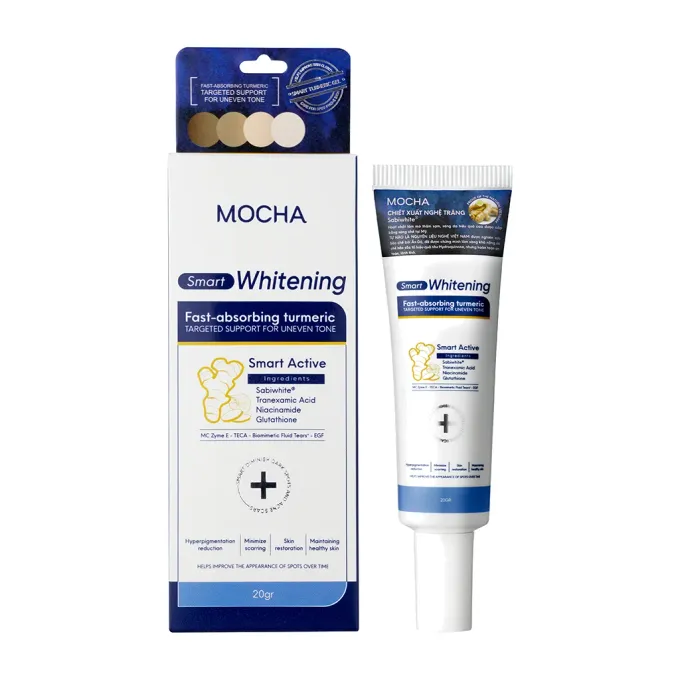
A post-blemish mark is no longer a blemish
A spot passes through two quite different phases. First inflammation: a congested pore, a red and swollen area. Then the consequence of that inflammation — the skin produces extra pigment where it was inflamed, leaving a darker mark once the spot itself has gone.
The two phases need different things. The inflamed phase needs something acting on congestion. The mark phase needs something acting on pigment — the same active family used for melasma, because underneath it is the same pigment problem.
Get the order wrong and both are slower: a mark-softening product on an inflamed spot does not settle it faster, and a spot gel on a healed mark only dries that patch of skin.
Squeezing makes the mark deeper, not faster
How dark and how deep a mark ends up tracks fairly closely with how inflamed things were beforehand. Squeezing increases inflammation, so it deepens and prolongs exactly the mark you were trying to avoid.
With a deep spot that has no head, squeezing also pushes the contents downwards rather than out — which is how a spot becomes a depressed scar.
Plainly: no product on this site compensates for squeezing.
Marks darken in the sun too
This gets overlooked because people file post-blemish marks under “acne” rather than under “pigment”. But pigment is what they are, and UV drives them exactly as it drives melasma.
So someone applying a mark gel faithfully each evening but skipping sunscreen each morning is pulling in two directions — the situation the sun protection line describes.
It is also why the mark gel is designed for evening use.
Which one, when
Two steps for two phases, not two alternatives
This is where people commonly get it backwards: applying a mark-softening product to a still-inflamed spot, then concluding it does nothing.
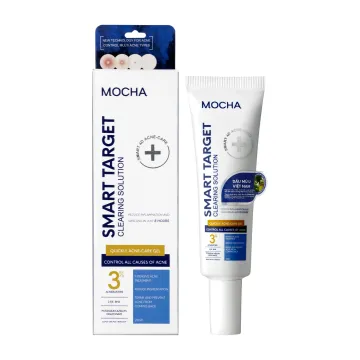
Smart Target spot gel
235,000₫
- When to use
- While the spot is swollen and red
- How to apply
- Dab on the spot, a pea-sized amount
- Time of day
- As needed, morning or evening
- Main actives
- Tamanu oil, Acnebusters 3%, BHA 0.5%, sulfur, zinc PCA
- What it addresses
- Congested and inflamed areas
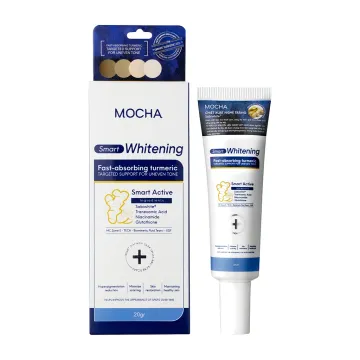
Smart Whitening Turmergel
215,000₫
- When to use
- After it settles, leaving a darker mark
- How to apply
- Spread over the area or face, two to three pea-sized amounts
- Time of day
- Evening
- Main actives
- Sabiwhite 0.3%, niacinamide 3%, tranexamic acid 3%, glutathione
- What it addresses
- Pigment left behind once inflammation has gone
If you only pick one: pick for the skin you have today, not for the outcome you worry about most. While a spot is inflamed, the mark-softening step is not yet its turn.
Frequently asked questions
What about severe or cystic acne?
That needs a dermatologist. Severe inflammatory acne, cysts, or breakouts lasting months are not something a topical product resolves, and waiting usually makes the resulting scarring worse.
Do post-blemish marks fade on their own?
Most fade over time, but how fast depends on how deep the pigment sits and on daily sun protection. Shallow marks may fade over a few months; deeper ones take considerably longer.
Can depressed scars be softened?
No. A depressed scar is a change in the skin's structure, quite unlike a mark, which is only pigment. No topical product fills a depressed scar — that is work for medical procedures.